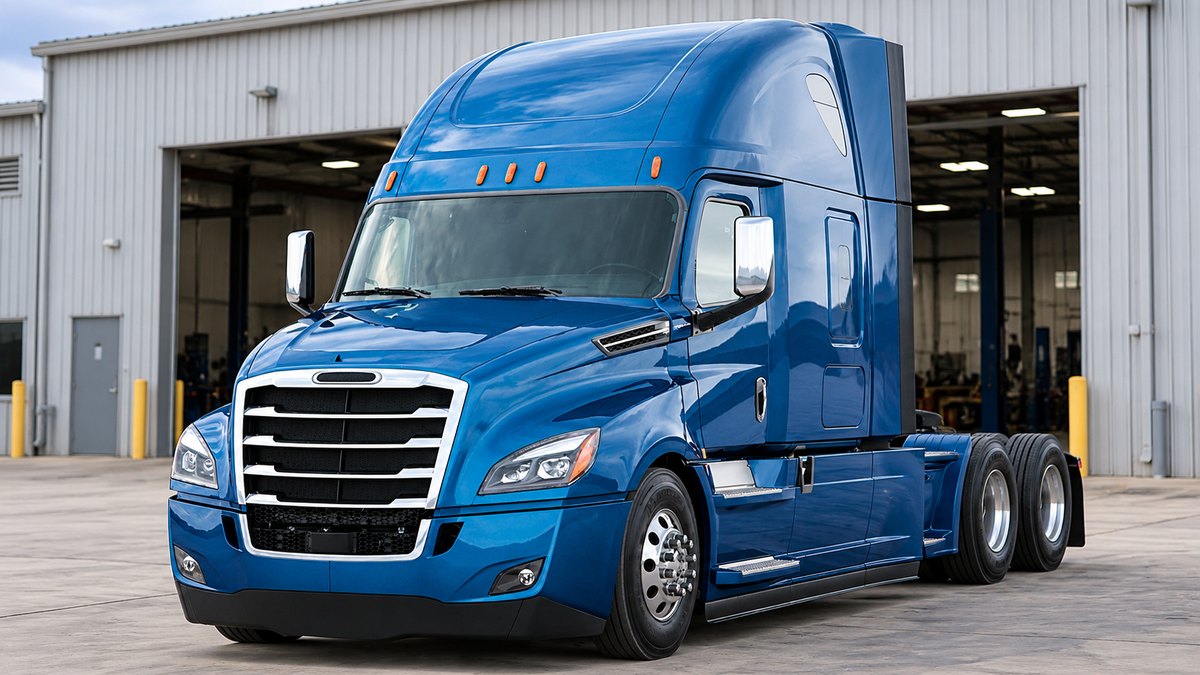

Few trucks are as familiar on North American highways as the Freightliner Cascadia. Since its debut in 2007, more than one million units have been sold, and the model has gone through several generations, each one more efficient than the last. Freightliner estimates that fuel efficiency has improved by more than 35 percent across the model’s history. That evolution is great news for operators, but it also means a Cascadia built in 2010 and one built in 2024 share a name and very few exterior parts.
Like most replacement parts for semi trucks, Cascadia components are designed around specific model years and chassis configurations. Getting the generation and configuration right is the single most important step in any repair, and it takes only a few minutes once you know where to look. This guide explains how the generations differ, which parts are replaced most often and how to order with confidence.
In This Article:
Know Which Cascadia You Have
Cascadia part listings usually include a year range and a three-digit code such as 113, 125, 116 or 126. These numbers describe the bumper-to-back-of-cab (BBC) dimension in inches, and they tell you both the generation and the hood length. The longer BBC versions use a longer hood, typically paired with larger-displacement engines, while the shorter versions suit regional and weight-sensitive work.
First Generation: 2008–2017 (113 and 125)
The original Cascadia replaced earlier Freightliner highway models and quickly became a fleet favorite. Trucks from this period are identified as the Cascadia 113 or Cascadia 125. Many of them are still working, often with second or third owners, which keeps demand strong for bumpers, headlights, hoods, step skirts and cooling components. Front-end parts such as bumpers, grille guards and headlights are often listed for both BBC lengths within this generation, while hoods and hood fenders are generally tied to one specific length.
New Cascadia: 2018 and Newer (116 and 126)
The redesigned New Cascadia arrived for the 2018 model year with completely reshaped bodywork. The hood, bumper, headlights, grille, mirrors and fairings all changed, so none of them interchange with first-generation trucks. Versions are designated 116 and 126. Most parts for Freightliner Cascadia trucks sold today are made for this generation, simply because it represents such a large share of the trucks currently in service.
Fifth Generation: 2026+
The fifth-generation Cascadia was unveiled in late 2024, with production starting in 2025. It brings a 1.9 percent fuel efficiency gain over its predecessor, a redesigned hood, dual-stage LED headlights, a hood-to-bumper seal, new bumper air ducts, three-piece front wheel well closeouts and an optional Max Aero bumper. The new headlights illuminate in a 45-degree pattern, which removes the need for separate fog lights, and they handle defogging, de-icing and high-beam switching automatically. In parts catalogs, components for this truck are usually labeled 2026+.
Front-End Parts That Need Replacement Most Often
The front of a long-haul tractor takes the most punishment: stone chips, animal strikes, dock contact and winter road spray. On any Cascadia, four groups of front-end components account for most repairs.
Bumpers and Bumper Components
The standard highway bumper on many Cascadias is 14 inches tall and comes in chrome steel or plastic designs, with or without fog light openings. A bumper is rarely a single piece of hardware. Behind and around the main section sit inner reinforcements, bumper corners, mounting brackets, trim pieces and air flow deflectors. After a collision, the brackets and reinforcements are often bent even when they look fine, and a new bumper mounted on a distorted bracket will never sit straight. Replacing the supporting hardware together with the bumper shell lets the truck go back together correctly in one visit.
Headlights and Fog Lights
Headlight assemblies are sold as individual sides or as matched sets, in halogen and LED versions. LED units draw less current, last much longer and produce a whiter beam that makes night driving noticeably easier. Black housings give the front end a modern look, while chrome housings suit a more traditional style. Headlight trims and fog light brackets are separate parts, so it is worth replacing them along with the lamps if they are faded or cracked. Owners of fifth-generation trucks have a simpler lighting setup, because the factory design does not use separate fog lamps.
Hoods, Fenders and Grilles
The Cascadia hood is a large fiberglass assembly with several bolt-on components: hood fenders, splash guards, cowl panels, hood vent grilles and the grille with its logo emblem. Small cracks in fiberglass tend to spread under constant vibration, so a damaged corner should be repaired or replaced early. Hood fenders are sold per side and sometimes come with an accessory set that includes the mounting hardware, which saves time during installation.
Grille Guards
For trucks that run rural routes or travel at night, a grille guard is one of the most practical safety additions available. Steel guards in black or chrome finishes protect the radiator, headlights and hood from animal strikes and often turn a potential tow into a cosmetic repair. Every guard attaches through generation-specific mounting brackets: a bracket set made for a 2008–2017 truck will not fit a 2018+ frame, and the fifth generation uses its own heavy-duty guard designed for its plastic bumper.
Body, Cab and Cooling Components
Beyond the front end, several part groups need regular attention on a high-mileage Cascadia. Step fairing panels and step skirts, often made from aluminum, absorb daily boot traffic and curb contact. Cabin fairings and their brackets keep airflow smooth between the cab and trailer, and a loose fairing can create noise and drag long before it fails. Door mirrors are available with heated glass, which keeps them clear in freezing rain and frost. Drop visors, quarter fenders, washer fluid tanks and floor mats complete the list of common wear items. When a mirror begins to vibrate at highway speed, check the arm fasteners and pivot joints before replacing the glass, because new glass on a loose mount will keep shaking.
The cooling system deserves special care. A Cascadia uses a radiator, a charge air cooler for the turbocharged intake air and an air conditioning condenser, usually stacked together at the front of the truck. Debris trapped between these cores reduces airflow and raises engine temperature on long climbs, so cleaning them at regular service intervals pays off. Coolant reservoir tanks become brittle after years of heating and cooling cycles, and a heavy-duty replacement tank is an inexpensive way to prevent a roadside leak. A quick pressure test of the cap and system during routine service can reveal a weak seam before it turns into a breakdown. If a water pump starts to weep at the seal, replace it promptly and inspect the hoses and clamps at the same time.
How to Order the Right Part the First Time
Most fitment problems are easy to avoid with a short checklist before ordering:
- Confirm the model year from the tenth character of the VIN and the build date on the door jamb label.
- Identify the BBC code (113, 125, 116 or 126) from your registration documents, data plate or dealer records.
- Note configuration details such as fog light openings, bumper material, sleeper type and mirror style.
- Record the side correctly: in North America, driver side means left and passenger side means right.
- Look for a part number on the old component and use it to cross-reference the replacement.
Catalogs that include both the year range and the BBC code in each product name make this process much easier. On tacoma-truckparts.com, for example, Cascadia listings carry codes such as 125/113 or 126/116 next to the model years, so you can see at a glance which generation a part belongs to. A clear photo of the damaged part and its mounting points helps settle any remaining questions quickly.
Practical Tips for Delivery and Installation
Lights, mirrors and smaller brackets normally ship as parcels, while bumpers, hoods and grille guards travel as freight. Freight deliveries are easier to schedule with a commercial address and a phone number the carrier can reach. Inspect every crate before signing and note any visible damage on the delivery receipt. That simple note makes any claim fast and straightforward, and keeping a record of the part numbers you replace makes every future order quicker and more accurate.
Many Cascadia repairs are well within reach of an experienced owner-operator. Headlights, fog lights, mirrors and step skirts can usually be replaced with basic hand tools. A bumper swap is manageable with a helper and the right sockets, since the assembly is heavy and must be aligned with the brackets. Grouping related jobs, such as the bumper with its brackets and trim, or the radiator with its hoses and reservoir, keeps labor time to a minimum.
The Freightliner Cascadia has earned its reputation through comfort, efficiency and dependable service. With a clear understanding of its generations and a habit of checking the year, BBC code and configuration before ordering, owners can keep any Cascadia looking sharp and running reliably for many years and many more miles.